
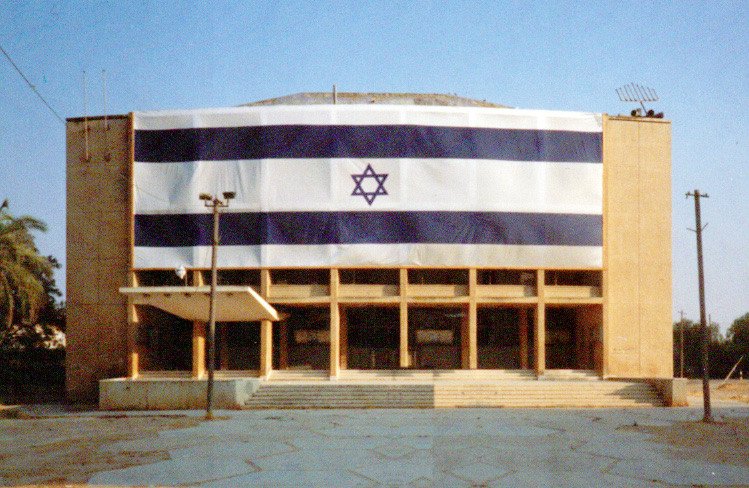
The Keren Cinema
The Keren cinema was the first cinema in the Negev
The story
The Keren cinema was the first cinema in the Negev. It was built in the Civic Center of Beersheba by the Histadrut's building workers' fund, and opened in October 1953. It was designed by the architects Shulamit and Michael Nadler, who at that time also designed the Rachel cinema in Ashkelon, and years later — together with Shmuel Bixon — the city hall that was dedicated right beside it. At the time of its construction the hall was considered exceptional in its architecture because of the wide-dimensioned concrete structure, and it held about one thousand two hundred seats. At first it was called “a culture house and hall for cinema shows, exhibitions and public gatherings”, people called it “our theatre”, and only afterwards was it named after the insurance and pension fund of building and public works workers. Its establishment cost more than half a million lirot, and the municipality exempted it from municipal taxes and from water rates and granted the film licence free of charge, in order to encourage a building intended to serve the residents. In a city that did not yet have a performing arts center, plays of Habima and the Cameri and musicals such as “Kazablan” and “Fiddler on the Roof” also went up on its stage, and it served for conferences, celebrations and assemblies. At the end of the 1950s Beit Ha'am was built nearby, and at the beginning of the 1970s the city hall was dedicated next to it, and between them extended Gan Moshe. The hall closed at the beginning of the 1990s, when multi-channel television hurt the profits of the cinemas. In 1997 the building was demolished, after the planning and building committee determined that its asbestos roof could not be rehabilitated; protests of the architects' association and of the Council for Conservation of Sites did not prevent the demolition. In its place stands today a complex of residential towers.
Read onPerhaps this too
At the place itself the stamp also gets a postmark with the date.
Sources
- קולנוע קרן — ויקיפדיה העברית Accessed 2026-08-11
- קולנוע קרן (Q12410998) — Wikidata Accessed 2026-08-11
Photographs
- זבולון כהן — PikiWiki Israel CC BY 2.5
