
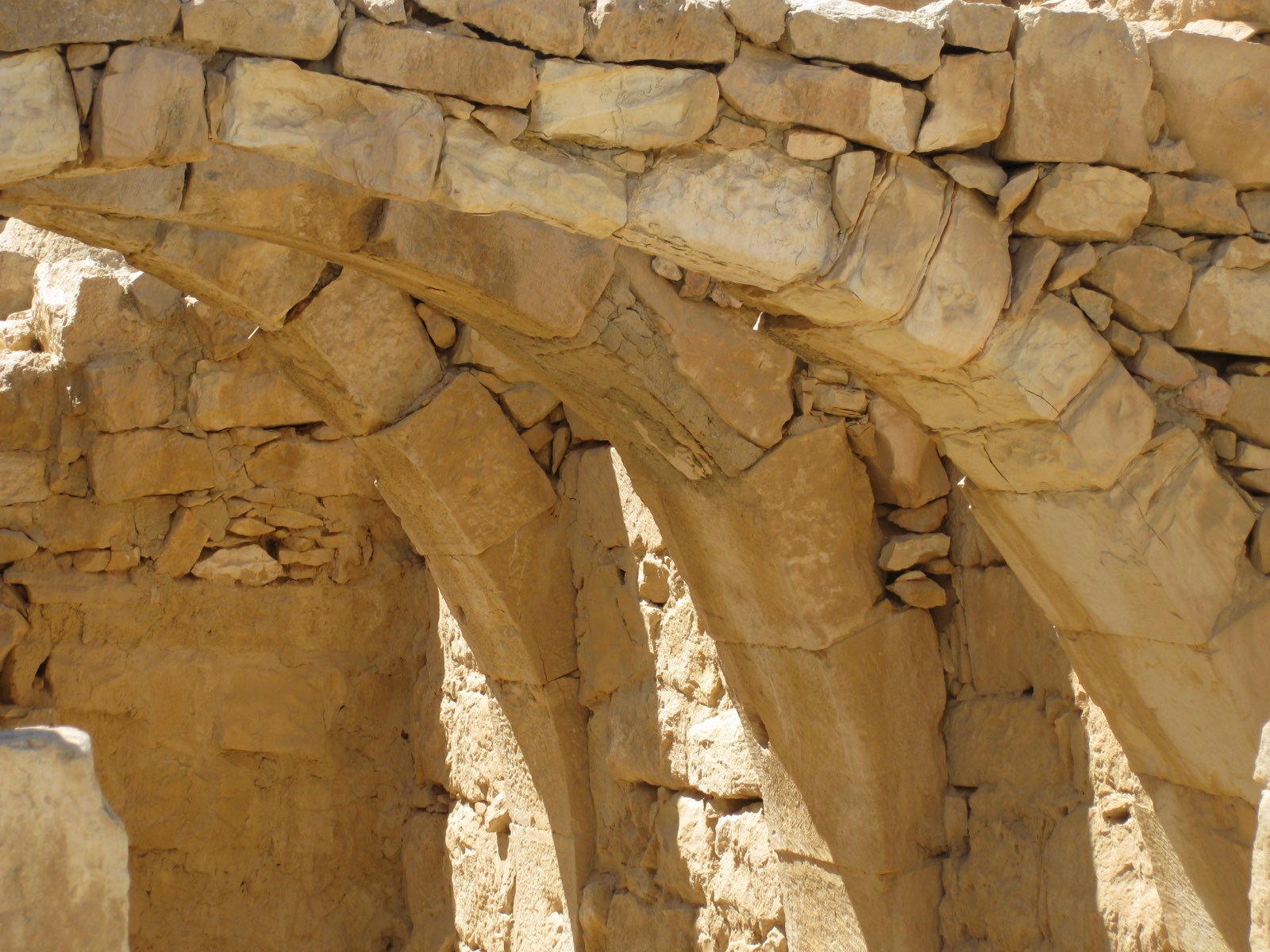
Mamshit
Mamshit, Kurnub in Arabic, is the smallest of the Nabatean cities of the Negev and the best preserved of them
The story
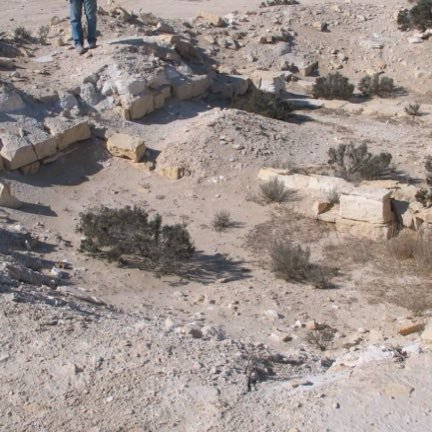
Mamshit, Kurnub in Arabic, is the smallest of the Nabatean cities of the Negev and the best preserved of them, and stands about five kilometers southeast of Dimona. It arose in the Middle Nabatean period, in the first century CE, and served at one and the same time as a trading station and an agricultural center on the road that connected the incense trade of Arabia to the ports of the Mediterranean. The settlement continued without a break into the Roman and Byzantine periods, and in the fourth to the sixth centuries churches with mosaic floors were built within it; in the Church of Saint Nicholas a dedicatory inscription was preserved. Among its buildings are a large dwelling house whose area is about a thousand square meters, a bathhouse in the Roman manner, large water reservoirs and a fortification wall. In the excavations carried out in the years 1956–1957 and again in 1993–1994 there was found in it the largest hoard of coins ever discovered in Israel — ten thousand five hundred silver coins — and also papyri in Greek and lead weights. The site is a national park, and in 2005 it was included in the UNESCO World Heritage list.
Read onPerhaps this too
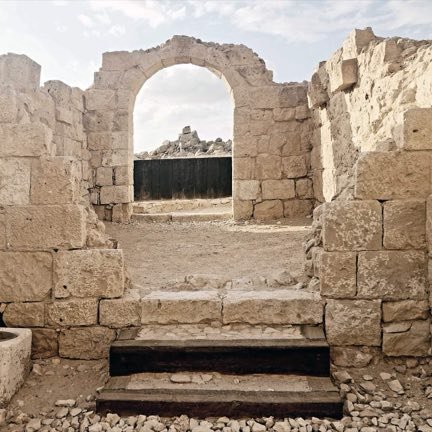
At the place itself the stamp also gets a postmark with the date.
Sources
- ממשית — ויקיפדיה העברית (התקופות, המבנים, מטמון המטבעות והחפירות) Accessed 2026-08-14
- Incense Route – Desert Cities in the Negev — Wikipedia (a lista dos componentes inscritos em 2005: as quatro cidades, os fortes Moa, Kazra, Nekarot, Makhmal e Grafon, e os khans; criterios iii e v; 6.655 ha) Accessed 2026-08-14
- ממשית — OpenStreetMap (a coordenada do sitio) Accessed 2026-08-14
Photographs
- Deror avi CC BY-SA 3.0
