
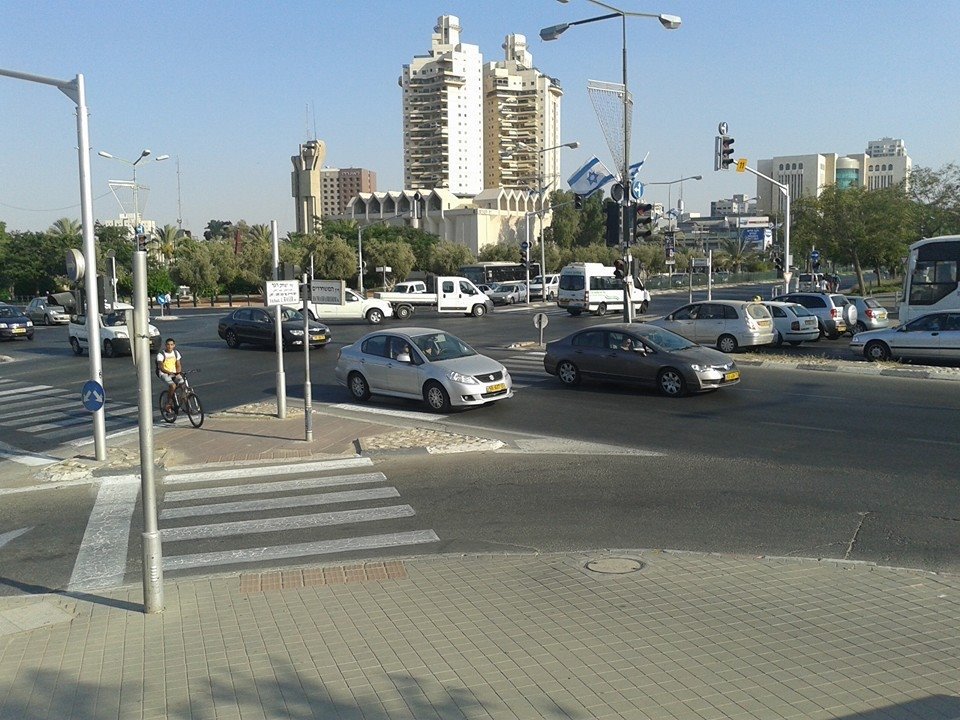
Rager Boulevard
The main traffic axis of Beersheba
The story
Rager Boulevard is the main traffic axis of Beersheba, and Route 406 passes along it. It connects the northern entrance of the city with the Eli Cohen junction in the south — the meeting with Route 25, which continues southward to Eilat and to Mitzpe Ramon and westward to Ofakim — and with Herzl and He-Halutz streets, which enter the Old City. In the north it passes through Neighborhood Dalet, from there southward it separates Neighborhood Gimel from Neighborhood Bet, and in its southern part Neighborhood Alef from the Civic Center. At its sides, from north to south, stand Ben-Gurion University of the Negev, the Soroka University Medical Center, the Beersheba Teachers' Center, the Performing Arts Center, Beit Yad LaBanim, the Culture Hall and the Negev Mall. Its former name was “Ha-Nesi'im”, and in the year 1997 the name was changed in memory of Yitzhak (Izho) Rager, mayor of Beersheba, who died in that year while in office. Rager (1932–1997) was born in Cairo, and four months after his birth his family returned to the country; his father, David Rager, was the first city engineer of Beersheba. He was a journalist — a correspondent of Kol Israel in Paris and in Geneva, spokesman of the Broadcasting Authority and an editor — and afterwards a consul in New York, where he engaged in the struggle to open the gates of the Soviet Union to its Jews. In the year 1983 his family settled in Omer. Together with the businessman David Azrieli he established the Negev Mall, which opened to the public in March 1990, and in the year 1989 he was elected to the head of the city with twenty-two thousand six hundred and forty-eight votes — sixty and three tenths of a percent. In January 1992, after a public struggle of his, Beersheba received the status of Development Area A. He was elected again in 1993 and served until his death.
Read onPerhaps this too
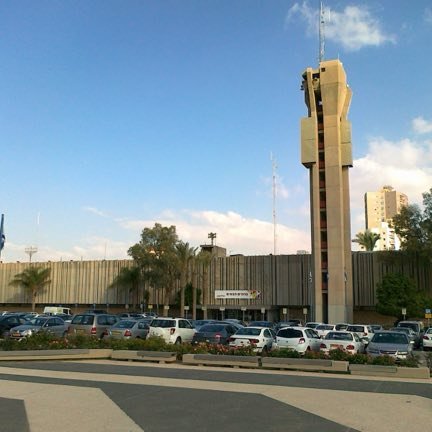
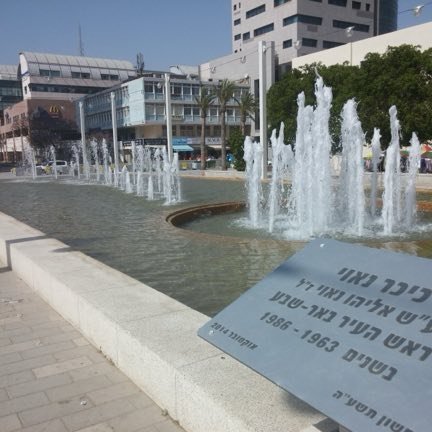
At the place itself the stamp also gets a postmark with the date.
Sources
- שדרות רגר — ויקיפדיה העברית (o traçado, a estrada 406, o nome anterior «הנשיאים», a mudanca de nome em 1997 e a lista dos sitios ao longo da avenida) Accessed 2026-08-14
- יצחק רגר — ויקיפדיה העברית (anos de vida, o pai engenheiro municipal, o jornalismo, o consulado em Nova Iorque, o Kanyon HaNegev de marco de 1990, a eleicao de 1989 com 22.648 votos e 60,3%, e o estatuto de area de desenvolvimento A em janeiro de 1992) Accessed 2026-08-14
- OpenStreetMap — as 46 vias com o nome «שדרות יצחק רגר» dentro de Beer Sheva. A coordenada desta ficha e o centro geometrico dos 231 nos dessas vias Accessed 2026-08-14
Photographs
- Danny-w CC BY-SA 4.0
