
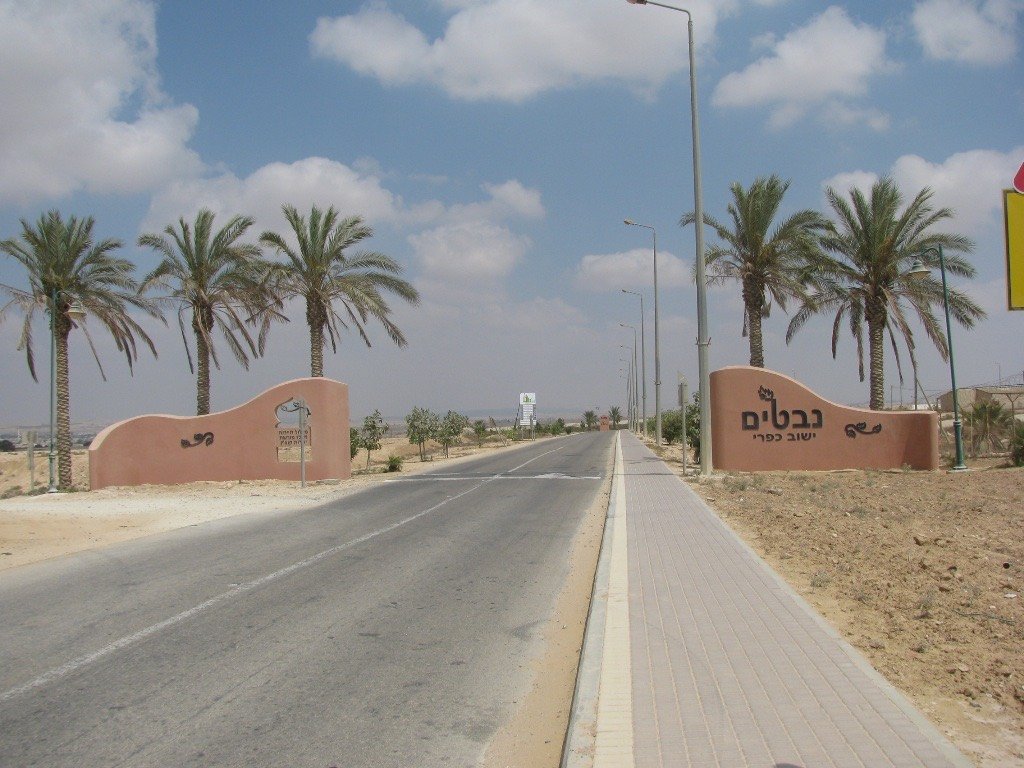
Nevatim
A moshav in the northern Negev
The story
Nevatim is a moshav in the northern Negev, about eight kilometers east of Beersheba, and one of the 11 points that were established together in the region. It was founded on 6 October 1946, at the close of Yom Kippur, on the lands of “Madsus” that the Jewish National Fund had bought, by immigrants from Iraq of the “Nevatim” garin and a minority from Europe; their base of departure was the Beit Eshel observation outpost, which had been set up three years earlier. Its history is a sequence of garinim that broke. In March–April 1947 the garin fell apart for lack of budget and some of its members moved to Beit Eshel; among them Aharon Mukhtar, who was murdered in August 1947 while traveling on an Arab bus from Gaza to Beersheba. A garin of immigrants from Romania that was brought in its place also broke up, and in August 1947 the place was manned by a third body, also from Romania, which held it together with Palmach men until November 1948. In the War of Independence the moshav was part of the “Beit Eshel — Nevatim bloc”, cut off from the rest of the Negev. On 17 December 1947 it was attacked by about three hundred men, and from nearby Beit Eshel a light aircraft that had landed there to evacuate a wounded man took off to its aid: to it were tied a machine gun with its muzzle pointing downward and bunches of grenades tied to one another, so that a single pin releases them all. After the IDF entered Beersheba the group broke up and the place was abandoned for about two months. Then a garin of the “Alexander” movement arrived, new immigrants from Hungary, who built the permanent settlement in its present place — about two kilometers from the temporary site, adjoining the Mandate road to Beersheba — with houses of clay in it. In the years 1952–1953 most of the settlers left, after heavy debts, drought, a plague of locusts and thefts. In April 1954 a group of sixty immigrant families from Cochin gathered at Sha'ar HaAliyah, and toward the end of May they settled at Nevatim; in order to clear a place for them the Agency evacuated the last of the Hungarians. The transition from a tropical climate to a desert climate was a challenge for them, and a team of instructors trained them for moshav life. They chose not to change the name of the moshav, and planted apricots and olives and afterwards flourishing rose farms.
Read onPerhaps this too

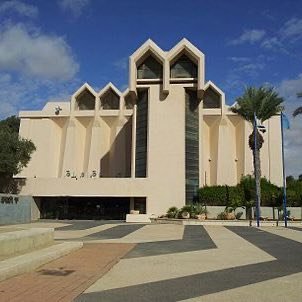
At the place itself the stamp also gets a postmark with the date.
Sources
- נבטים (מושב) — ויקיפדיה העברית Accessed 2026-08-11
- נבטים (Q2467017) — Wikidata Accessed 2026-08-11
Photographs
- יהודית גרעין-כל — PikiWiki Israel CC BY 2.5
