
Climate
When a Drought Is Declared
To remember
In Israel a drought year is defined as a year in which less than 75 percent of the annual average falls.
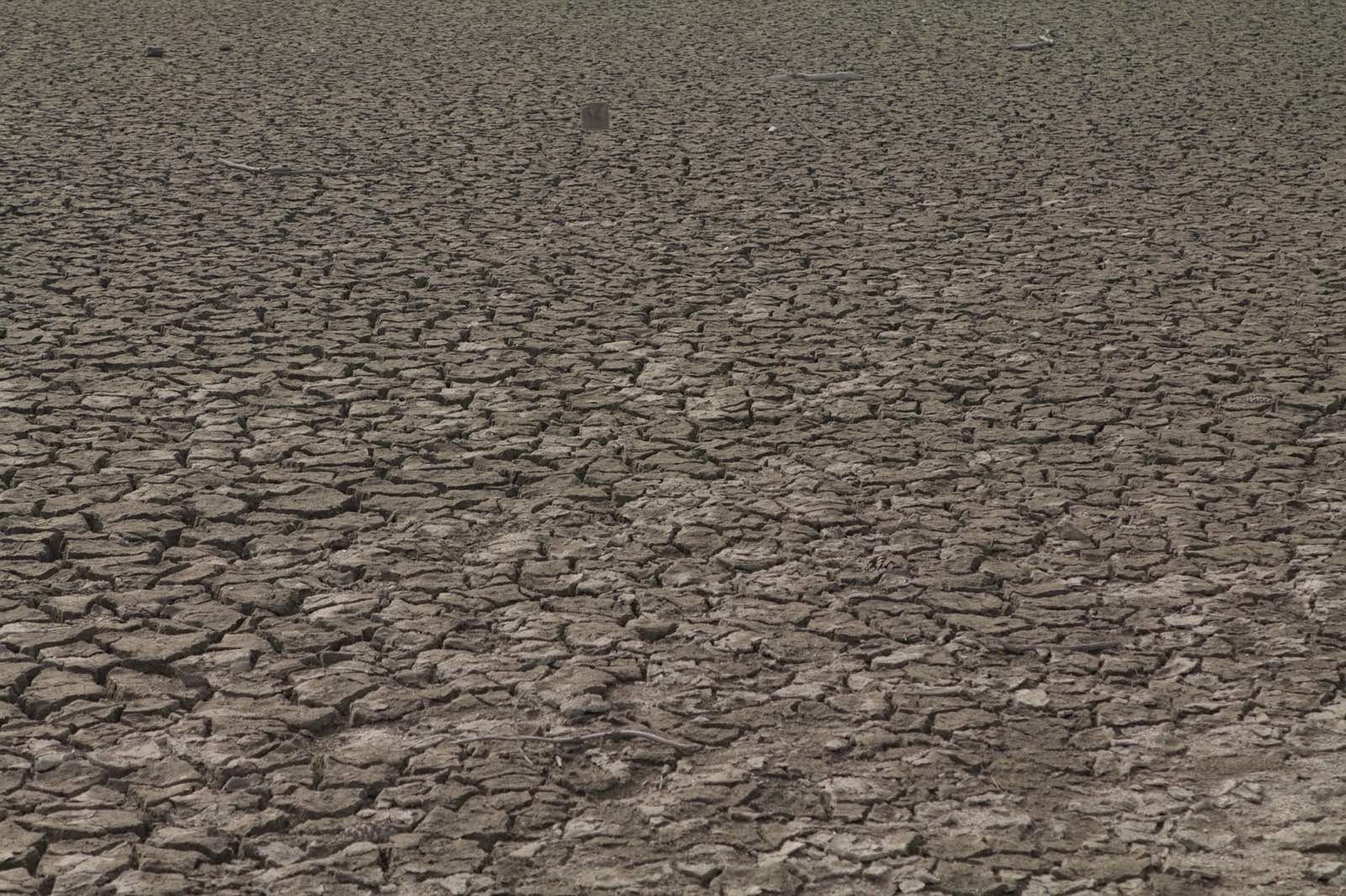
A drought is a natural phenomenon in which the fall of rain in a certain place diminishes or stops in an exceptional and prolonged way.
And the word 'exceptional' is the whole point. In the desert little rain always falls, and that is not a drought — that is simply a desert. A drought is not 'little rain'. It is less than what is usual here.
And so there is a definition with a number. In Israel a drought year is defined as a year in which the rain that falls is less than 75 percent of the annual average — that is, a quarter less than usual.
And here is an example. If the average in a certain place is 530 millimeters a year, and in a certain year 397 fell there — that is a drought year. Notice that almost 400 millimeters is a very great deal of rain on the scale of the Negev. And even so, in that place, it is a drought.
And there are three kinds of drought, and they are not the same thing at all — one of them can occur without the others.
A climatic drought is when the annual quantity of precipitation is 25 percent less than the average — that is the number.
An agricultural drought is about distribution and not only about quantity: a good quantity of rain may fall, but at the wrong time in relation to what the crops need, and the result will be a damaged yield.
And a hydrological drought is when the reservoirs — the lakes, the groundwater — fall below the average. It comes later, because a large reservoir absorbs one weak year, but not three in a row.
And the consequences are not only agricultural. A prolonged drought is connected to desertification, to famine, to diseases, to the migration of whole populations, and to conflicts over water.
And in Israel there is also a legal side to this. There is a law of compensation for farmers harmed by drought, because a farmer who lost a yield because of a dry year did nothing wrong — he simply got a year like that. And when the reservoirs fall, the level of the Sea of Galilee and the water of the aquifers is checked, and it is decided how much water to pump and how much to leave in the ground.
And in Israel the answer to a drought is found today also in places that are not the sky: desalination plants and purified effluent water. That is, a year that was once a disaster is today a hard year that people cope with.
Sources
- בצורת — ויקיפדיה העברית
- Photograph: o_andras · CC BY-SA 4.0