
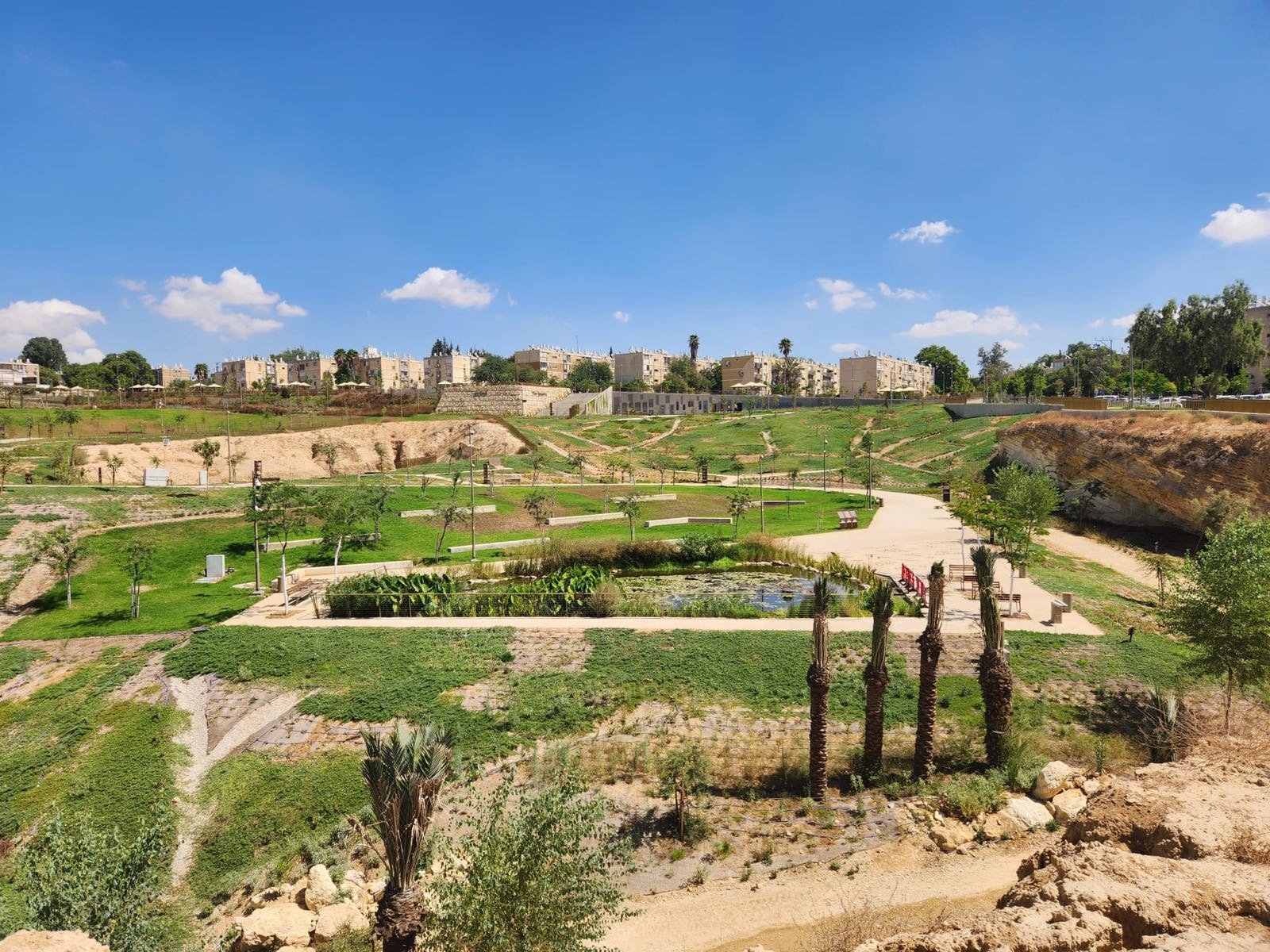
The Great Crater
A depression that served as a quarry
More photographs
The story
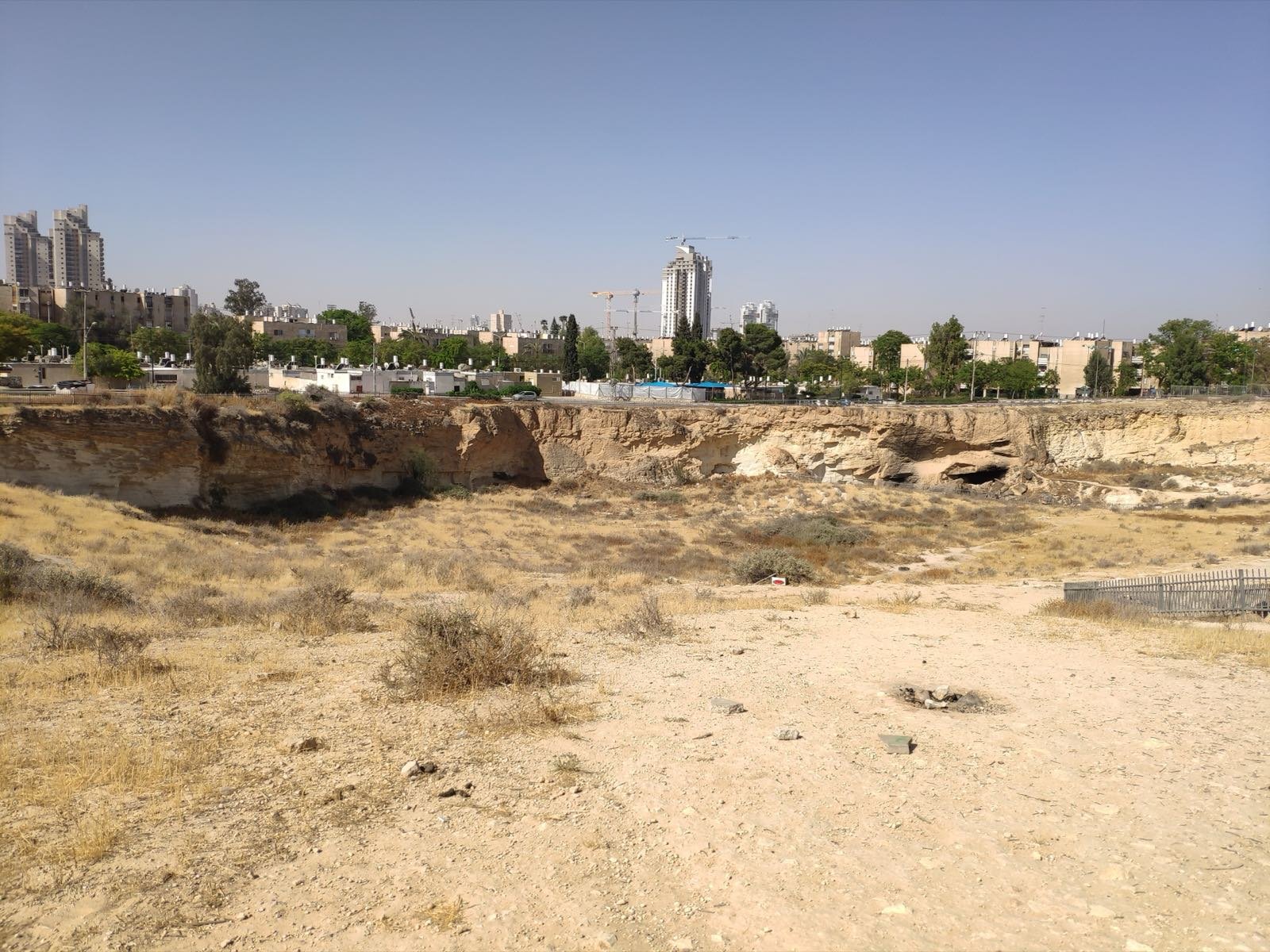
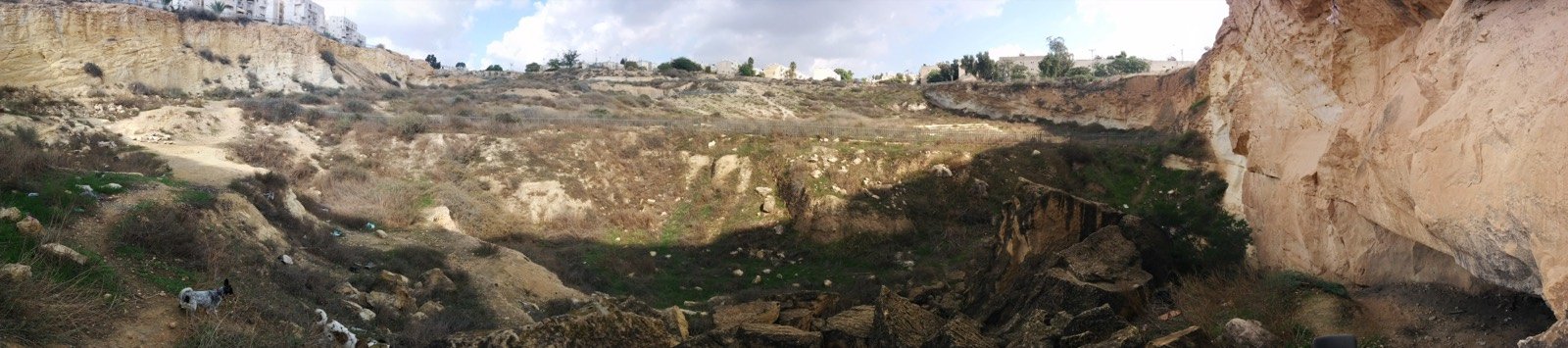
The Great Crater is a depression that served as a quarry, in Neighborhood Dalet, bounded by Yehuda HaLevi, Bar Giora and Rabbi Akiva streets. Its depth is fifteen meters, its width two hundred meters, and its area some thirty dunams. In the years 1900 to 1917 the Ottomans set up a quarry here, and hewed in it the building stones of most of the first stone houses of the Old City. The quarry went on working also in the period of the British Mandate, and with the entry of the IDF into the city the quarrying apparently ceased. After the founding of the state the methods of building changed, the stone was no longer needed, and the place became a shooting range for the residents of the city. It is possible that even before the Turks the Byzantines quarried here, who settled the Beersheba valley in the fourth to the seventh centuries. What was laid bare in the walls of the quarrying is much older. The rocks here settled on the northern bank of an ancient canyon — the Beersheba–Gaza canyon — which stretched over a length of at least one hundred kilometers, from today's Transjordan until it poured into the Mediterranean Sea between Be'eri and Sa'ad. In the Beersheba area its depth is estimated at some two hundred and seventy-five meters and its width at some three kilometers, and it was formed according to the estimates some six million years ago. Three kinds of rock are exposed in the wall: calcareous sandstone of the Pleshet formation, light and friable; limestone rich in fossils — fragments of shells and a few corals — of the Patish formation, hard and dark; and a light calcareous-chalky sandstone of the same formation, of which most of the walls are made. At the end of the nineteen-eighties the site was partly rehabilitated with the donation of the Jewish community of Montreal and the Fund for the Rehabilitation of Quarries, and a small amphitheater was built in it. In the year 2013 the Bracha Foundation and the municipality initiated an international architects' competition, and at its end the three offices that had been invited were joined into a single team. The works began in December 2020, and in 2023 the place opened as an urban park, in three areas: a green ring on the upper level, active terraces, and the inner quarry gardens — and in them an orchard, an urban desert oasis, the area of the Byzantine quarry, and a promenade along the quarrying wall.
Read onPerhaps this too
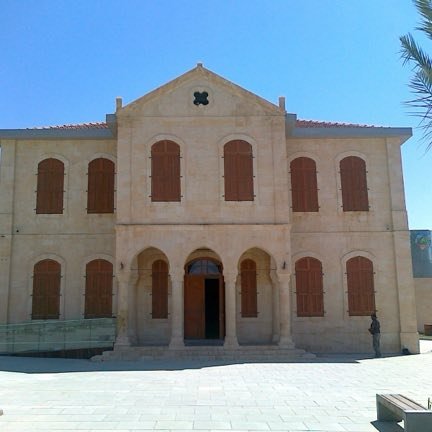
At the place itself the stamp also gets a postmark with the date.
Sources
- המכתש הגדול (באר שבע) — ויקיפדיה העברית Accessed 2026-08-13
- המכתש הגדול (Q20502086) — Wikidata (coordenada P625 desta ficha) Accessed 2026-08-13
Photographs
- BAswim CC BY-SA 4.0
- Shayshal2 CC BY-SA 4.0
- Yellowblood CC BY-SA 4.0


