
Places
Wednesday at the Market
To remember
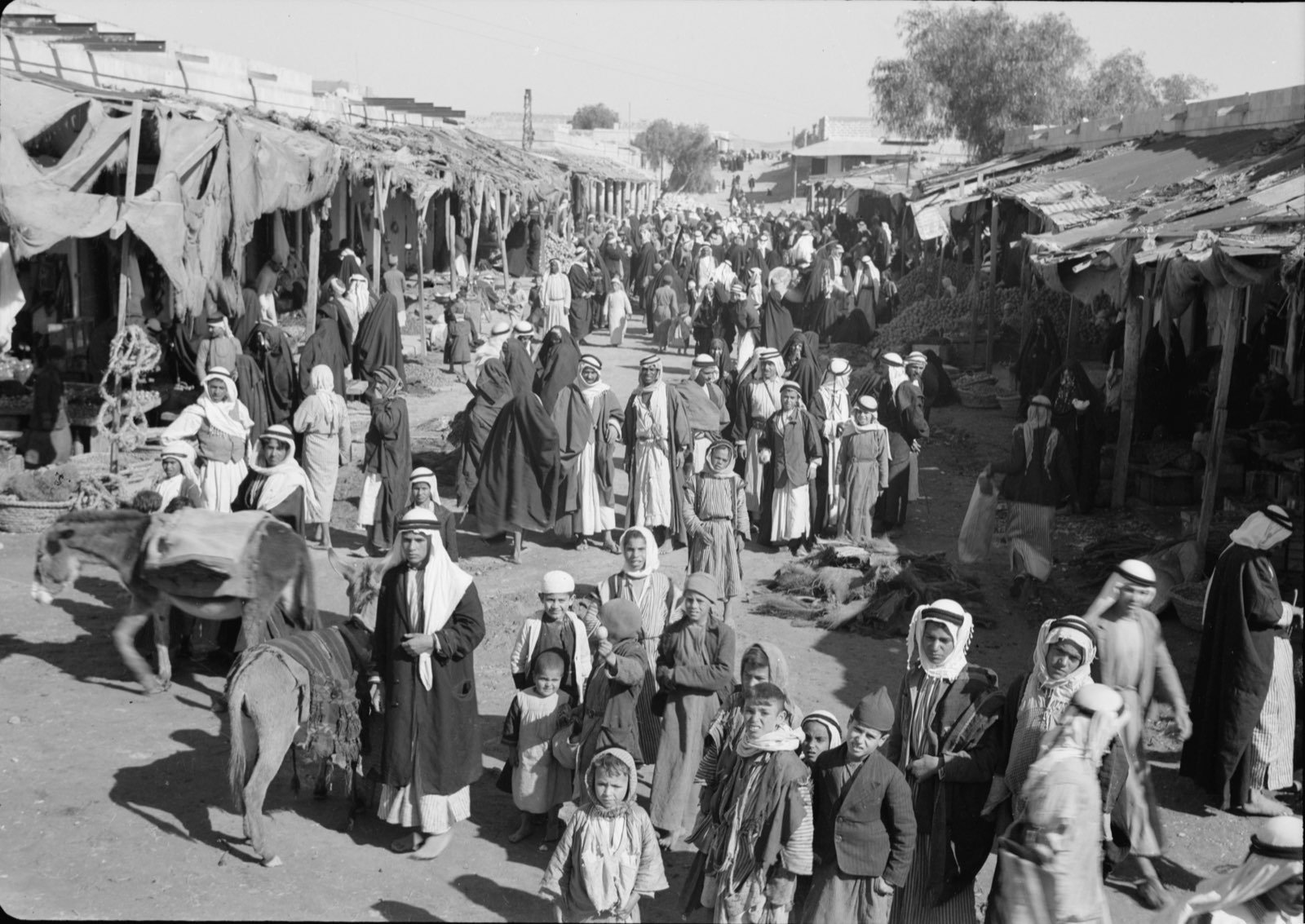
The Bedouin market was founded in 1905, and market day was Wednesday.
Until Beersheba was founded, in 1900, the Bedouin of the Negev traded mainly with Gaza. They visited Khan Yunis, Rafah and El Arish, each on its own market day — and that was a journey.
The Ottomans wanted to impose order in the desert and to collect taxes from its inhabitants, and so they founded the city at a point that commands several trade routes.
And they chose the point on purpose, taking into account the boundaries of the Bedouin confederations around it: the lands of the Azazma to the south, the Tiyaha to the east and the Tarabin to the west. That is, the city was fixed exactly at the place where three meet — an inter-tribal meeting point.
And in 1905 they founded a weekly market in it. This was one of their most notable actions: the market was meant to serve as an alternative to the markets of Gaza and its surroundings, and to spare the Bedouin the journey to them.
Already at an early stage the livestock market was separated from the vegetable market, and the trading was held on Wednesdays.
And why separate a livestock market from a vegetable market at all? Because these are two entirely different businesses. An animal is examined, weighed and bargained over at length, and it needs space and water. Vegetables are sold fast, and they spoil. Two different rhythms in the same yard get in each other's way — and so, in almost every large market in the world, they are separated.
And in the Mandate period the market grew. Its place was in an open area north of Hebron Road. The Bedouin brought surpluses of agricultural produce, livestock, tobacco and wool — and bought sugar, coffee, tea, rice and textiles. The market was the most important in the region, and residents of the Hebron hills and of Gaza traded in it too.
Afterwards hard years came. The military government cut the city off from the Bedouin of the surroundings for six years, and only in 1954 was the activity renewed.
From 1959 the trading was held on Mondays and Thursdays, and on Sundays and Wednesdays the compound served for second-hand trading.
In the 1960s the municipality moved the market to the vicinity of the Old City and united it with the municipal market. In February 2017 the municipality decided on its closure. And in December 2022 the market reopened — in Rahat, which is today the largest Bedouin city in the Negev.
Sources
- Photograph: Matson Collection · נחלת הכלל
- Photograph: American Colony Photo Department / Matson Photo Service — Library of Congress · Domínio público
- Photograph: Hoshvilim · CC BY-SA 4.0