
Archaeology
Why They Do Not Dig Everything
To remember
An archaeological excavation is an act of destruction — and so part of the site is deliberately left undug, for the researchers of the future.
There is one sentence every archaeologist knows, and it sounds the opposite of what you expect: an archaeological excavation is in essence an act of destruction. What has been dug cannot be dug again.
And that is true in the plainest sense. In order to reach the layer beneath, you have to take out the layer above it. It will not come back. You can keep the objects, but the order in which they lay — what was next to what, and at what height — can be kept only in the record.
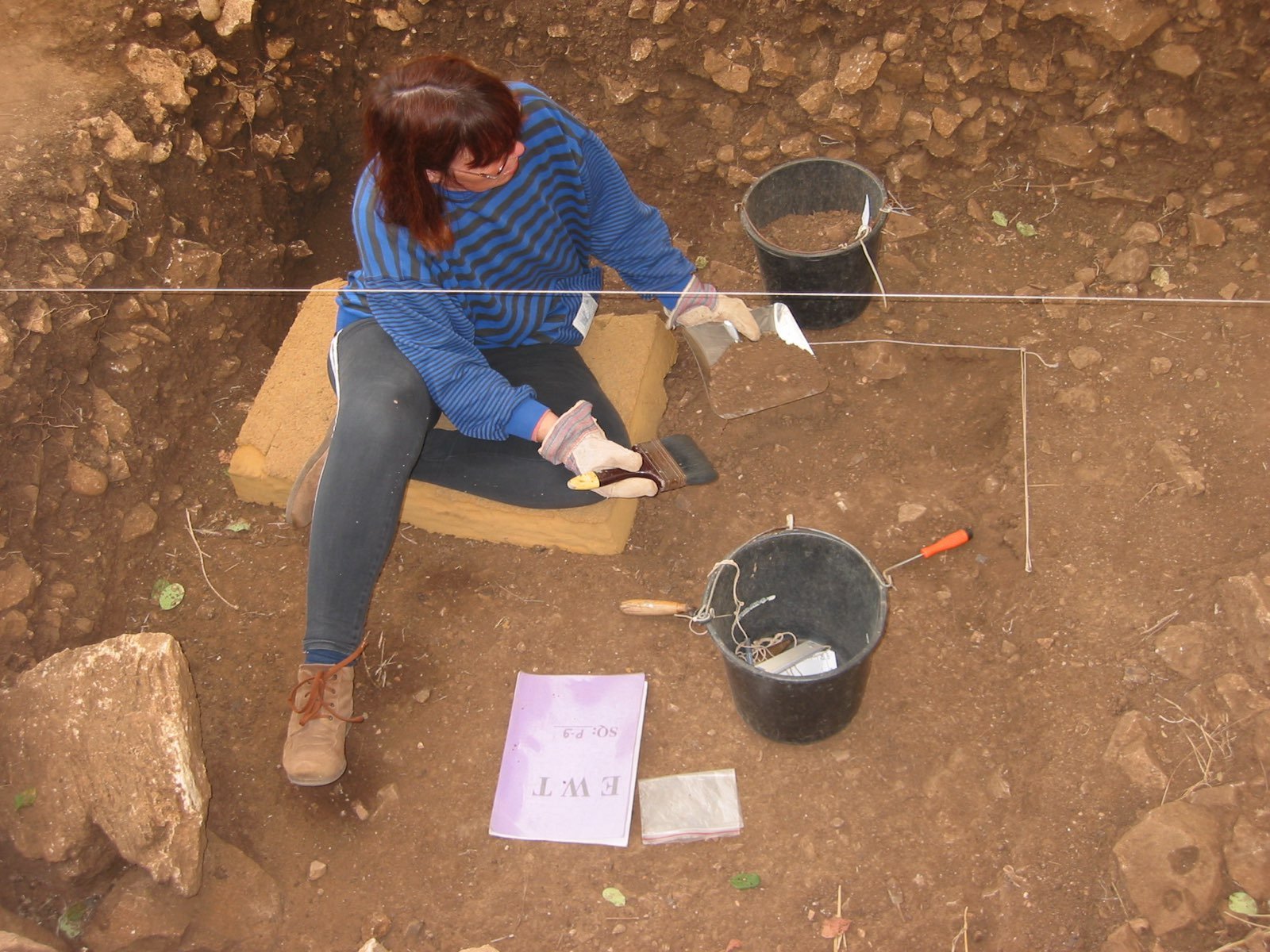
And so the excavation itself is built like a measurement, and not like a treasure hunt. The whole site is covered by a grid of lines of longitude and latitude that are marked with letters and numbers. In Israel it is customary for the grid of squares to be five by five meters.
And when a square is dug, a partition of half a meter is left between the squares — so that the area actually dug is four and a half by four and a half meters. That partition is not a waste. It creates an archaeological section, a wall you can look at from the side and see in it the layers one above the other, and identify changes easily.
And at every stage an exact record is kept: measurement, drawing, photography and written documentation of all the finds.
And every unit that is uncovered has a number of its own. A locus is a stratigraphic unit — a floor, a wall, a pit, a layer of ash — and each of them is numbered separately. And then the real work begins: to determine the relative chronology of each of the components uncovered, that is, what came before what. A beautiful object without a locus number is an object that has lost its story.
And now the part that is, perhaps, the most important lesson in this whole profession. A further reason that the whole site is not dug is the assumption that the technology of research will keep improving over the years. Leaving areas that have not been dug will make it possible to return to these sites in the future and to dig in them with new and more advanced means.
That is, archaeologists deliberately leave part of the site closed — for people who have not yet been born, who will know how to ask questions that nobody yet knows how to ask.
And that is also the reason an excavation is not a race. There is no prize for whoever reaches the bottom first.
And that, in the end, is what the word 'heritage' says.
Sources
- חפירה ארכאולוגית — ויקיפדיה העברית
- Photograph: Hanay · CC BY 3.0