
Astronomy
The Observatory on the Rim of the Makhtesh
To remember
At the observatory on the rim of Makhtesh Ramon there are about 170 completely clear nights a year.
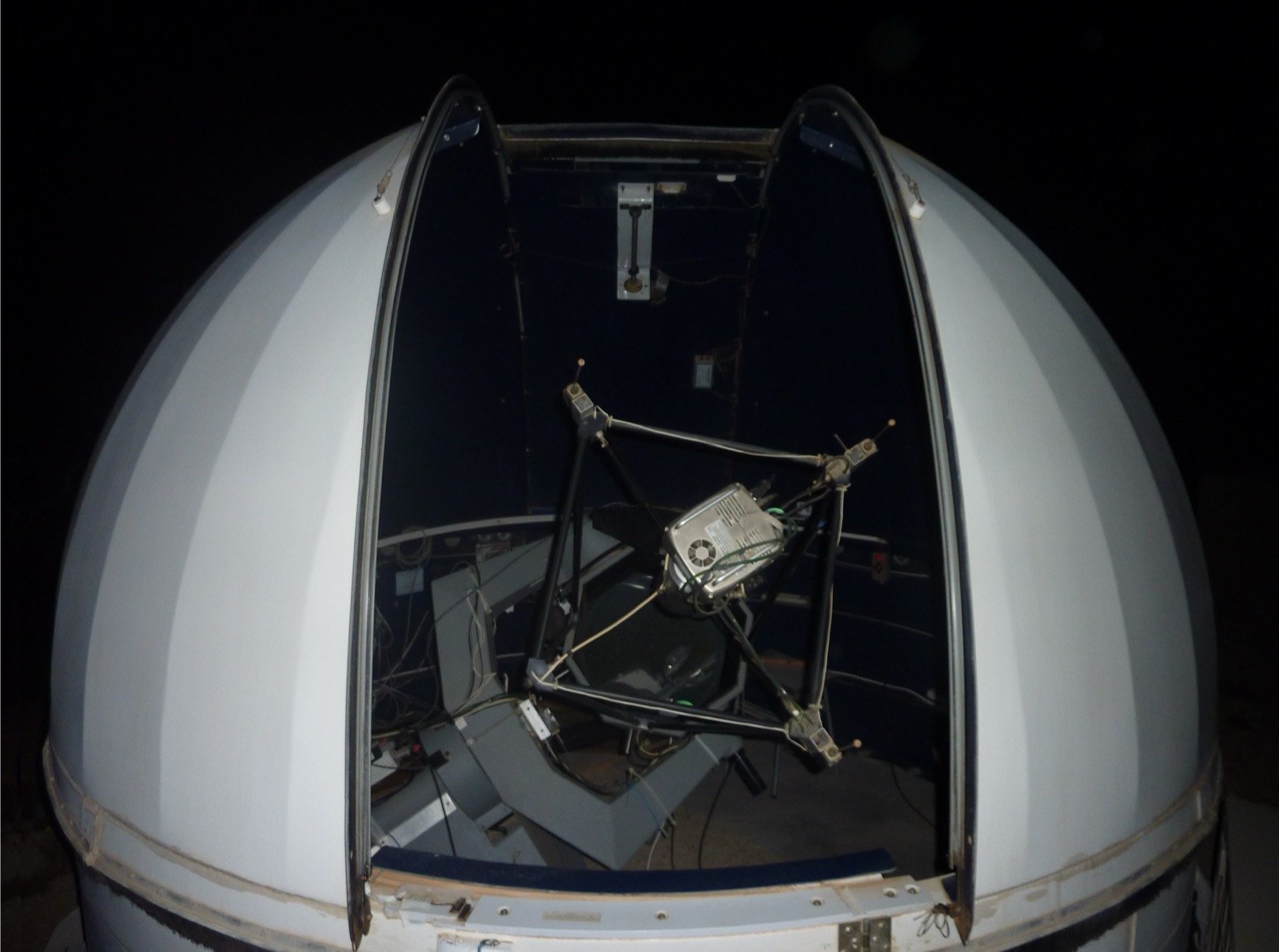
On the rim of Makhtesh Ramon, about five kilometers west of the town of Mitzpe Ramon, stands the Wise Observatory. It is the largest observatory in Israel, and it was established in 1971.
And why there of all places? Because in order to see stars you need three things, and all of them are in the Negev. You need dry air, because humidity and clouds blur. You need height, and the observatory stands 875 meters above sea level. And you need darkness — that is, to be far from the lights of a city.
And how many good nights are there? About 170 nights a year that are completely clear, and about 240 nights on which it is possible to work at least partly. In the Mitzpe Ramon area there are about 250 clear days a year. The best season for observation is from June to August, and the cloudiest months are from January to April.
The central telescope at the place is a mirror one meter in diameter. A mirror, and not a lens: large telescopes gather light with a curved mirror, because a large mirror is easier to build than a large lens of the same size.
And what do they look at through it? Black holes, planets outside the solar system, gamma-ray bursts, and the composition of comets. Much of this work is not 'looking' but measuring: how much light comes from a particular body, and how that quantity changes over time.
And the darkness around it is not self-evident, and it is measured. Artificial light spilled upward is called light pollution, and it erases stars from the sky. In September 2017 Makhtesh Ramon was declared a starlight reserve on behalf of the Dark-Sky Association. At the time of the declaration there were 54 such sites in the world in 15 countries, and Makhtesh Ramon was the first of its kind in the Middle East. And even so, in Israel there is no place free of light pollution from horizon to horizon — here too.
And there is another reason this place is important, and it is geographical. The observatory sits on longitude 35 degrees east, in the northern hemisphere. When an observatory in another place in the world stops following a particular body because the sun is rising there, the Wise Observatory can continue in its place. Astronomers work like this in shifts, all around the earth, and so it is possible to follow the same star without a break.
Sources
- מצפה הכוכבים על שם וייז — ויקיפדיה העברית
- מצפה רמון — ויקיפדיה העברית
- זיהום אור — ויקיפדיה העברית
- Photograph: Shy halatzi · CC BY-SA 3.0