
Places
What Was Here Before the Park
To remember
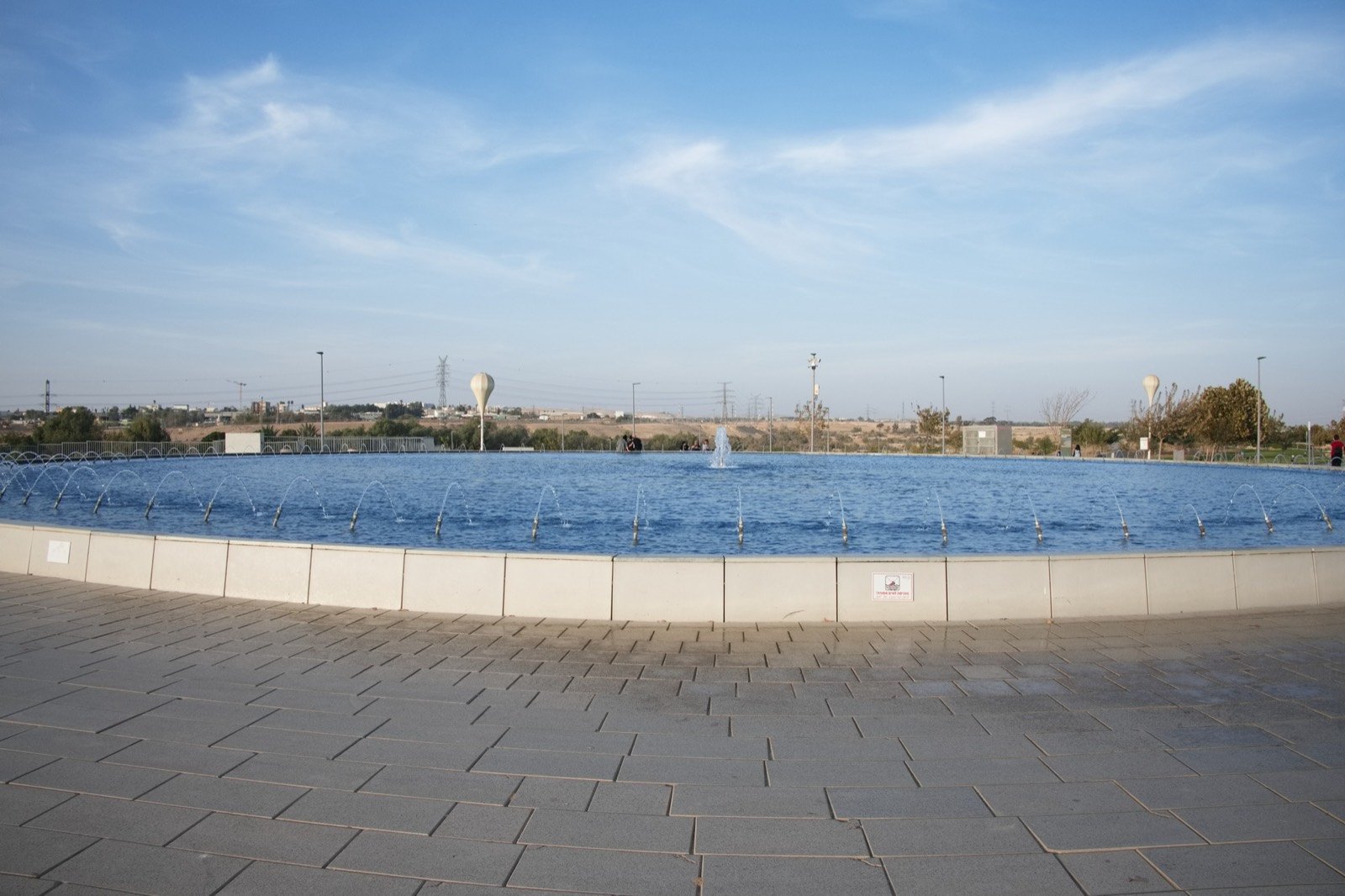
The lake in the park is the largest in Israel, and its water is purified effluent that plants filter without chlorine.
Nahal Be'er Sheva Park extends along the course of the stream, from Tel Be'er Sheva to the Neve Ze'ev neighborhood. Its length is about eight kilometers, and its area about 5,300 dunams.
And it is worth beginning precisely with what was here before. In the course of the stream there were sewage, building waste and quarry waste. The works of clearing them were done between the years 2000 and 2001 — that is, the park began with clearing, and not with planting.
The master plan was approved in January 2002. And in October 2009 the government approved a budget of 150 million shekels spread over seven years, of which 21 million for the preparation of access roads. The Jewish National Fund and private bodies also took part in the funding.
At the heart of the park there is an artificial lake of about ninety dunams, and it is the largest in Israel. And it is fed by purified effluent water of the city — that is, by the water the city has already used.
And what is effluent water? The water that went out of the houses — from the sinks, from the showers — and passed through purification at a sewage plant. It is not drinking water, and it is water you can irrigate with and fill a lake with. In a place where 200 millimeters of rain fall in a year, that is the difference between a lake and a dry pit.
And so that the water would stay clean without chlorine, they built a system of three ecological pools. In them wetland vegetation filters the water. That is, the plants do the work of cleaning.
In the compound is also the largest amphitheater in Israel, about 12,000 seats, designed by the landscape architect Gideon Sarig.
But the most interesting thing about this park is that it gathers into itself veteran points of the city. Inside it are the Turkish railway bridge of 1916; Abraham's Well; the remains of Beit Eshel; and the Bell Garden, with a mature eucalyptus grove and a building that served as an ice factory.
And at the meeting of Nahal Be'er Sheva with Nahal Beka is the Chalcolithic complex — Bir a-Safadi on the eastern bank, and Bir Abu Matar on the northwestern bank.
That is, one walk along the stream passes through six thousand years — and every station on it is a place where you can stop and look.
Sources
- Photograph: ענת פרנק גורלי via PikiWiki · CC BY 2.5