
Archaeology
How Do You Know How Old It Is
To remember
The half-life of carbon-14 is 5,730 years.
How do you know how old something found in the ground is? That is a good question, because nobody wrote a date on a piece of charcoal.
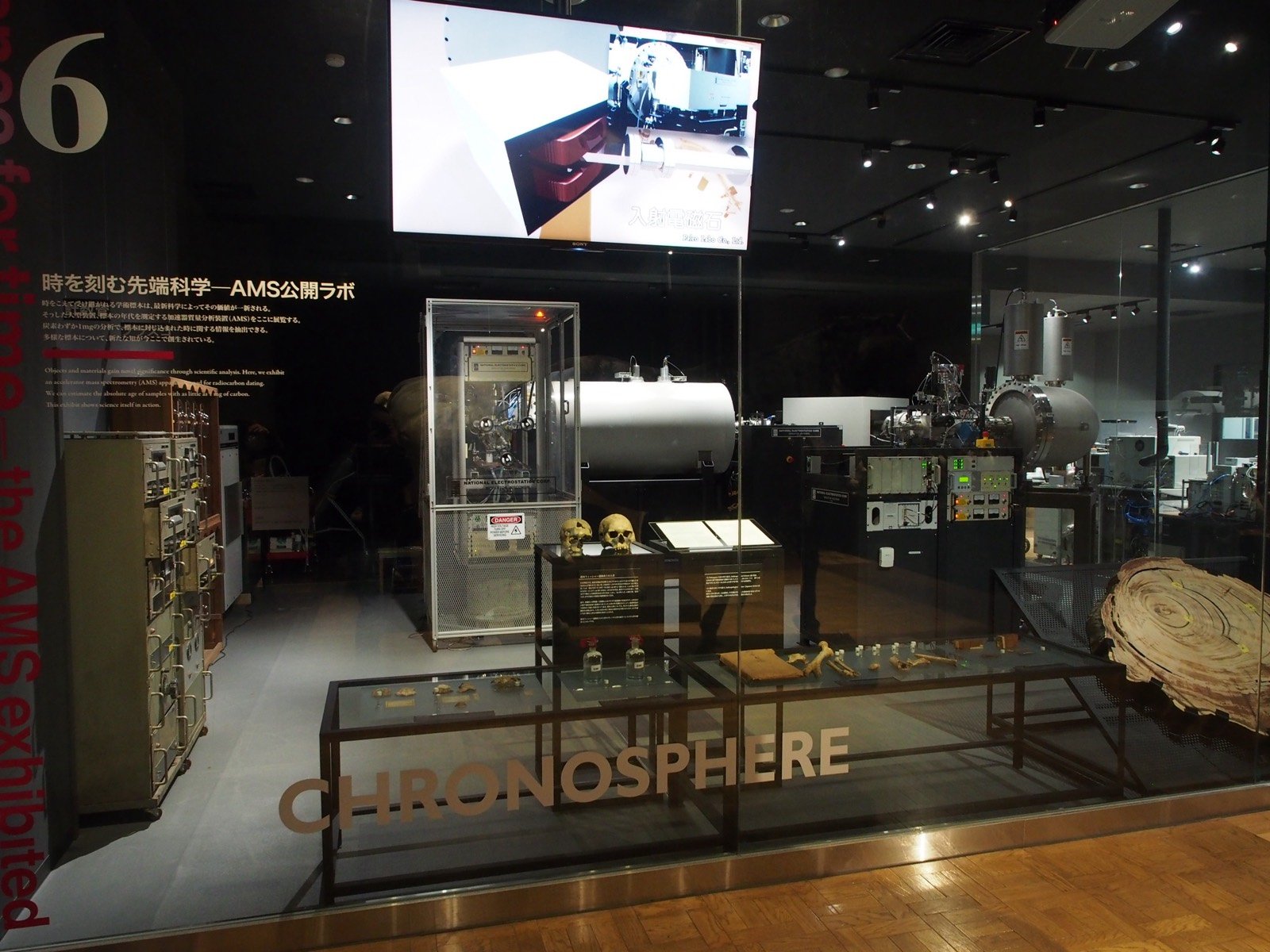
For organic material — wood, a seed, a bone, charcoal from a campfire — there is a method whose name is carbon-14 dating, and it is one of the most exact methods there are.
And it works like this. In the air a special carbon is being created all the time, carbon-14, when cosmic radiation from space meets nitrogen in the atmosphere. This carbon mixes into all the air, enters plants through their breathing, and from there passes to everyone who eats plants. That is, every living creature contains carbon-14, in the same proportion as there is in the air.
And the moment the creature dies, the intake stops. What is in the body stays there, and it decays slowly.
And here is the number. Carbon-14 decays at a fixed and known rate: after 5,730 years exactly half of it is left. After another 5,730 — half of the half. This time is called a half-life.
And so a measurement of how much carbon-14 is left in a piece of charcoal tells how much time has passed since the tree was alive. There is no guessing here. There is arithmetic.
The method was developed by the American chemist Willard Libby in 1949, and in 1960 he received the Nobel Prize for it.
And before this method existed, how did they date? By the layers. Stratigraphy is the study of the archaeological layers, and its rule is one: the earlier remains are beneath the remains that are later than them. That is why a tel is dug from top to bottom, and you meet the younger layers first. Walls too tell an order — a wall that is built on top of another wall is later than it.
The two methods work together. The layers say what came before what; the carbon says when.
And it has a limit, and it is worth knowing it. After enough half-lives so little carbon-14 is left that it cannot be measured. So the method is good for things tens of thousands of years old, and not for things millions of years old. For dinosaurs other methods are used, with materials that decay far more slowly.
Sources
- תיארוך פחמן-14 — ויקיפדיה העברית
- סטרטיגרפיה (ארכאולוגיה) — ויקיפדיה העברית
- חפירה ארכאולוגית — ויקיפדיה העברית
- Photograph: Kestrel · CC BY-SA 4.0