

Yeruham Well
At the western entrance to Yeruham
Scripture
Tanakh
וַתֵּלֶךְ וַתֵּתַע בְּמִדְבַּר בְּאֵר שָׁבַע
and she departed, and strayed in the wilderness of Beer-sheba.
Tanakh
וַיִּפְקַח אֱלֹהִים אֶת־עֵינֶיהָ וַתֵּרֶא בְּאֵר מָיִם וַתֵּלֶךְ וַתְּמַלֵּא אֶת־הַחֵמֶת מַיִם וַתַּשְׁקְ אֶת־הַנָּעַר
And God opened her eyes, and she saw a well of water; and she went, and filled the bottle with water, and gave the lad drink.
Quran
وَٱذْكُرْ فِى ٱلْكِتَٰبِ إِسْمَٰعِيلَ ۚ إِنَّهُۥ كَانَ صَادِقَ ٱلْوَعْدِ وَكَانَ رَسُولًا نَّبِيًّا ﴿٥٤﴾ وَكَانَ يَأْمُرُ أَهْلَهُۥ بِٱلصَّلَوٰةِ وَٱلزَّكَوٰةِ وَكَانَ عِندَ رَبِّهِۦ مَرْضِيًّا ﴿٥٥﴾
The story
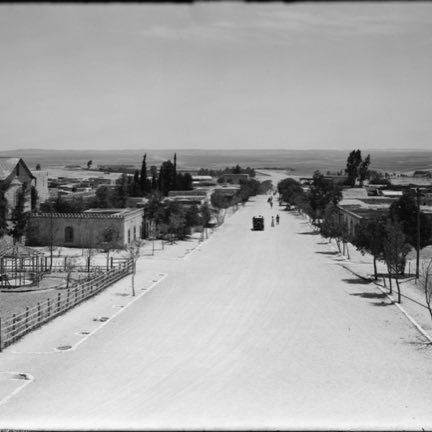
At the western entrance to Yeruham, next to Tel Rahma, is an ancient well — Bir Rahma, the well of mercy. Professor Yohanan Aharoni identified it with the well that Hagar found at the time when she strayed with her son Ishmael in the wilderness of Beersheba, as told in the Book of Genesis. Tel Rahma itself, adjacent to the well, is identified with ancient Yeruham. The name Yerham is mentioned for the first time in the Shishak inscription, which documents his invasion of the Land of Israel at the end of the tenth century BCE, in the phrase "Arad of the house of Yerham". Yeruham sits on the ancient way of Atharim, which came from Kadesh Barnea by way of today's Sde Boker and up to Arad, and along it many fortresses from the period of the kings of Judah have been found.
Read onPerhaps this too
At the place itself the stamp also gets a postmark with the date.
Sources
- ירוחם — ויקיפדיה העברית Accessed 2026-08-14
- OpenStreetMap node 278476008 — coordenada usada nesta ficha Accessed 2026-08-14
- The Holy Scriptures According to the Masoretic Text — Jewish Publication Society, Philadelphia 1917 (public domain; source of the English gloss on the Tanach verses) Accessed 2026-08-14
- Библия. Синодальный перевод, 1876 (общественное достояние; источник русского перевода стихов Танаха) Accessed 2026-08-14
- La Santa Biblia — Reina-Valera, revisión de 1909 (dominio público; fuente de la glosa española de los versículos del Tanaj) Accessed 2026-08-14
- João Ferreira de Almeida, «A Bíblia Sagrada, contendo o Novo e o Velho Testamento», Londres, R. e A. Taylor, 1819 (domínio público; fonte da glosa portuguesa dos versos da Tanach) — Wikisource Accessed 2026-08-14
- الكتاب المقدس — الترجمة العربية لسميث وفان دايك، بيروت ١٨٦٥ (ملك عام؛ مصدر الشرح العربي لآيات التناخ) Accessed 2026-08-14
- Коран. Перевод Г. С. Саблукова, Казань 1894 (общественное достояние; источник русского перевода коранического отрывка) — Викитека Accessed 2026-08-14
Photographs
- Created with artificial intelligence