
The Great Mosque of Beersheba
The Great Mosque is the first mosque built in Beersheba and in the Negev
Then and now
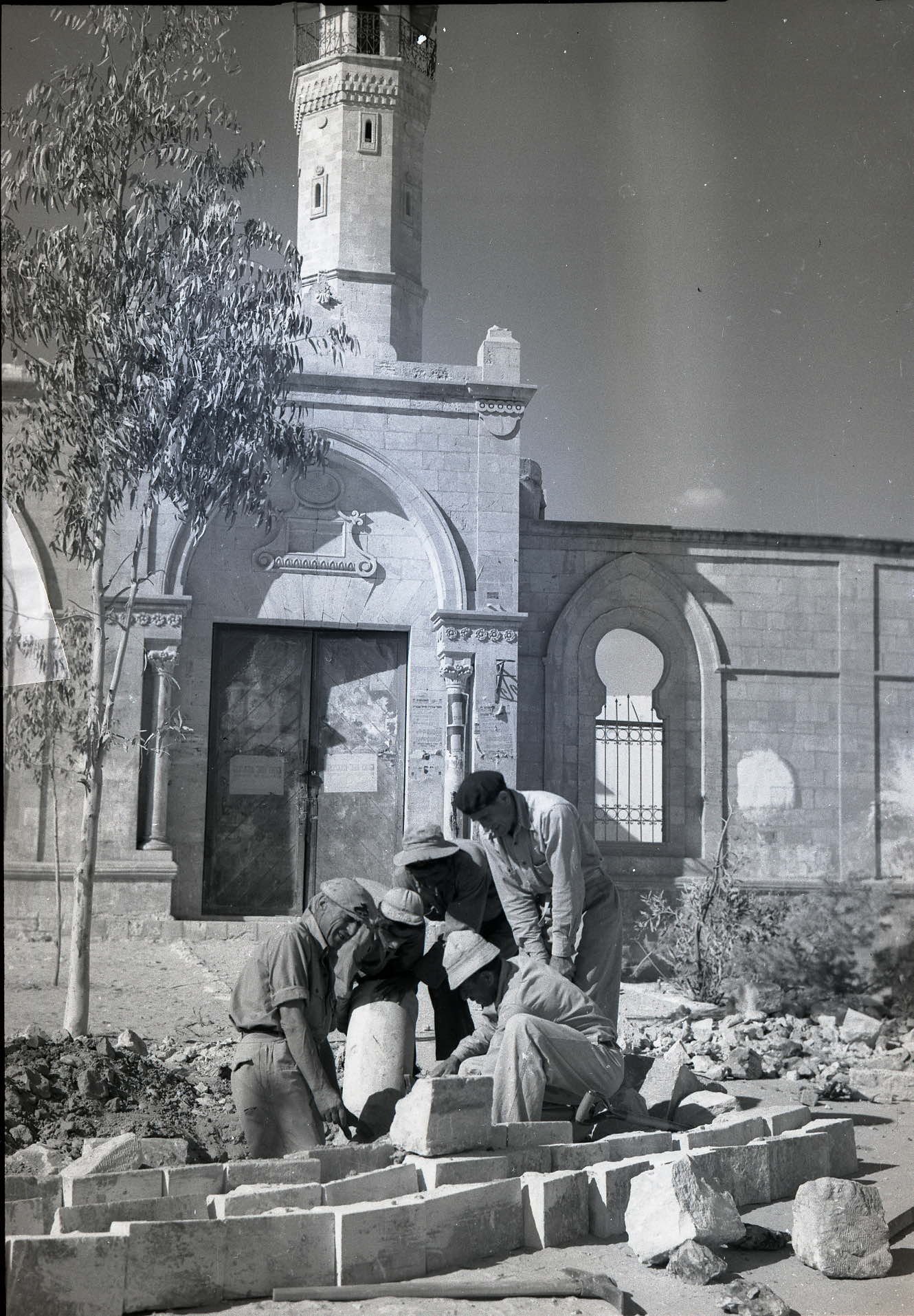
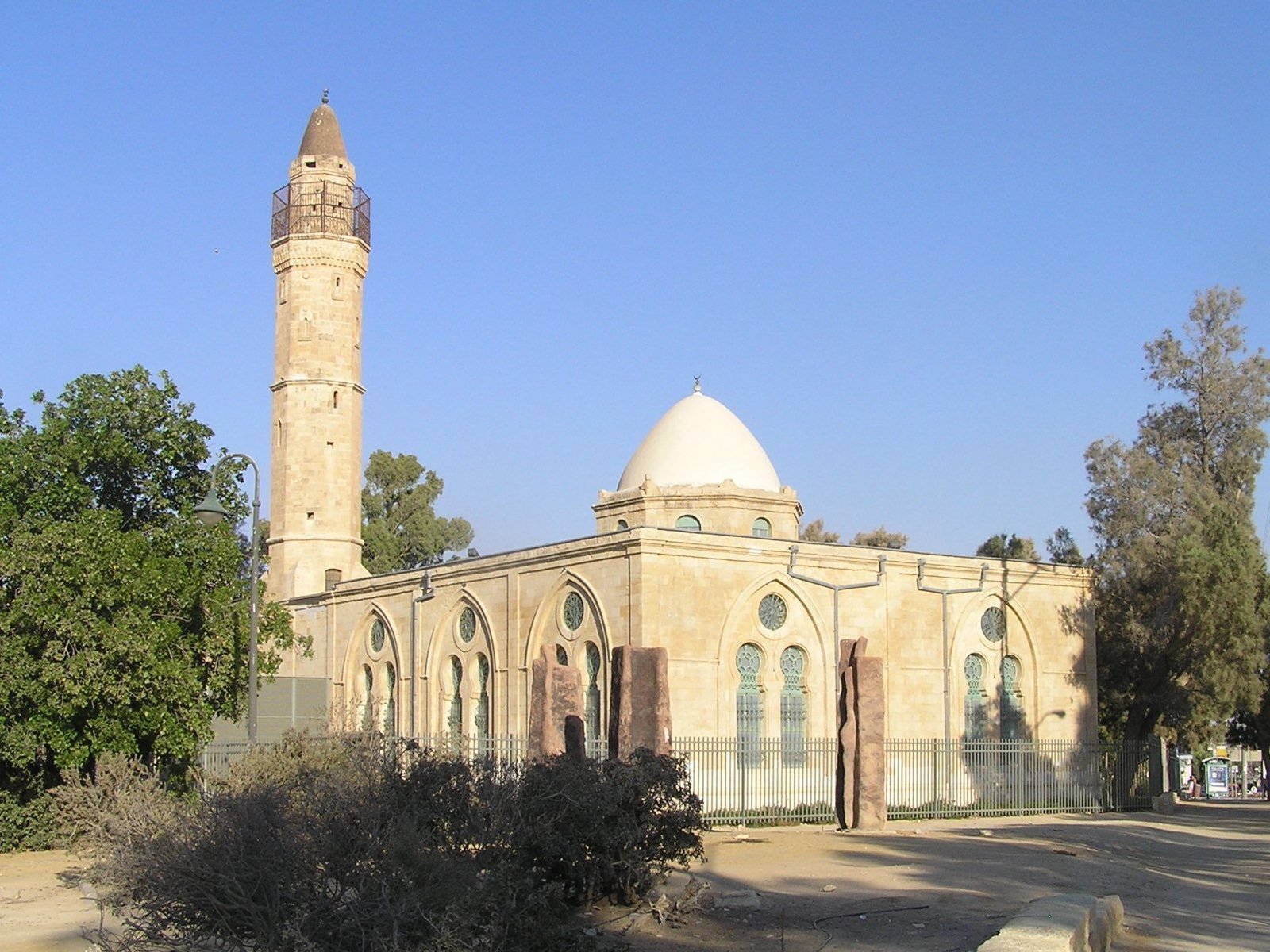
The story
The Great Mosque is the first mosque built in Beersheba and in the Negev, and for years it was considered the largest of the mosques in the south of the country. It was erected in 1906 by the Ottoman authorities, next to the governor's house, and the two buildings are today heritage sites in one compound. According to the source the kaymakam, the Ottoman district governor, laid the building upon a local Arab contractor of the city's notables; when the mosque was not built to his satisfaction he ordered it dismantled and brought a Christian architect from Jerusalem to design it anew and to supervise the construction. The building belongs to the type of the Turkish mosque, all of which is under one domed roof, but it is not a clear example of the type: its dome is relatively small and the eight windows at its base are not large. Being the first and only mosque of its time in the Negev, the building was experienced as impressive, and the minaret was considered its crowning glory; the stones of the minaret were brought on camels from the ruins of Halutza. From 1948 no use was made of the mosque for prayer; in the years 1948 to 1953 it served as a detention house and the magistrates' court, and from 1953 as a museum. In 1992 it was evacuated as being a dangerous building, and in the years 2008 to 2010 conservation and restoration works were carried out in it under the management of the Israel Antiquities Authority. A petition to the High Court of Justice that sought to return it to prayer was rejected in June 2011, and it was determined that the building would serve as a museum dedicated to the culture of Islam and the peoples of the East, and so it serves today.
Read onIn this place
Perhaps this too
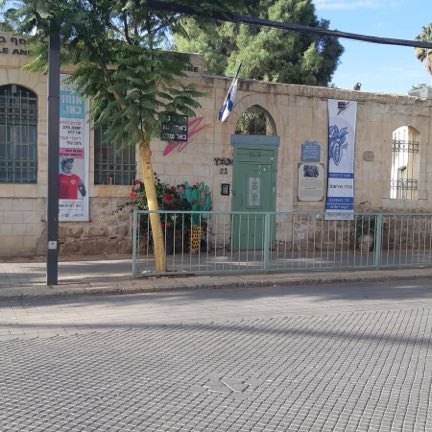
At the place itself the stamp also gets a postmark with the date.
Sources
- המסגד הגדול בבאר שבע — ויקיפדיה העברית Accessed 2026-08-10
- המוזיאון לתרבות האסלאם ועמי המזרח — ויקיפדיה העברית Accessed 2026-08-10
- Large Mosque in Beersheba (Q6914502) — Wikidata Accessed 2026-08-10
- File:Beersheba Mosque72a.JPG — Wikimedia Commons Accessed 2026-08-10

Photographs
- Eman CC0
- Benno Rothenberg, אוסף מיתר — הספרייה הלאומית CC BY 4.0
