
Geography
More Than Half the Country
To remember
The Negev is about 58 percent of the area of the State of Israel — about 13,000 square kilometers.
If you look at a map of Israel and cover with a finger everything that is south of Beersheba, you will find that you have covered more than half the country. The Negev takes up about 58 percent of the area of the State of Israel — about 13,000 square kilometers.
That is a number that is hard to believe, because on many maps the Negev looks small. The reason is simple: on maps you mark cities, and large cities are mainly in the north. The Negev is full of ground on which not many names are marked, and so the eye skips over it.
And where does the Negev begin? Not at a sign. Its northern boundary is defined by rain — the line where on average 300 millimeters fall in a year. There is also a line of 200 millimeters, further south. The boundaries of this region are measured in water and not in roads.
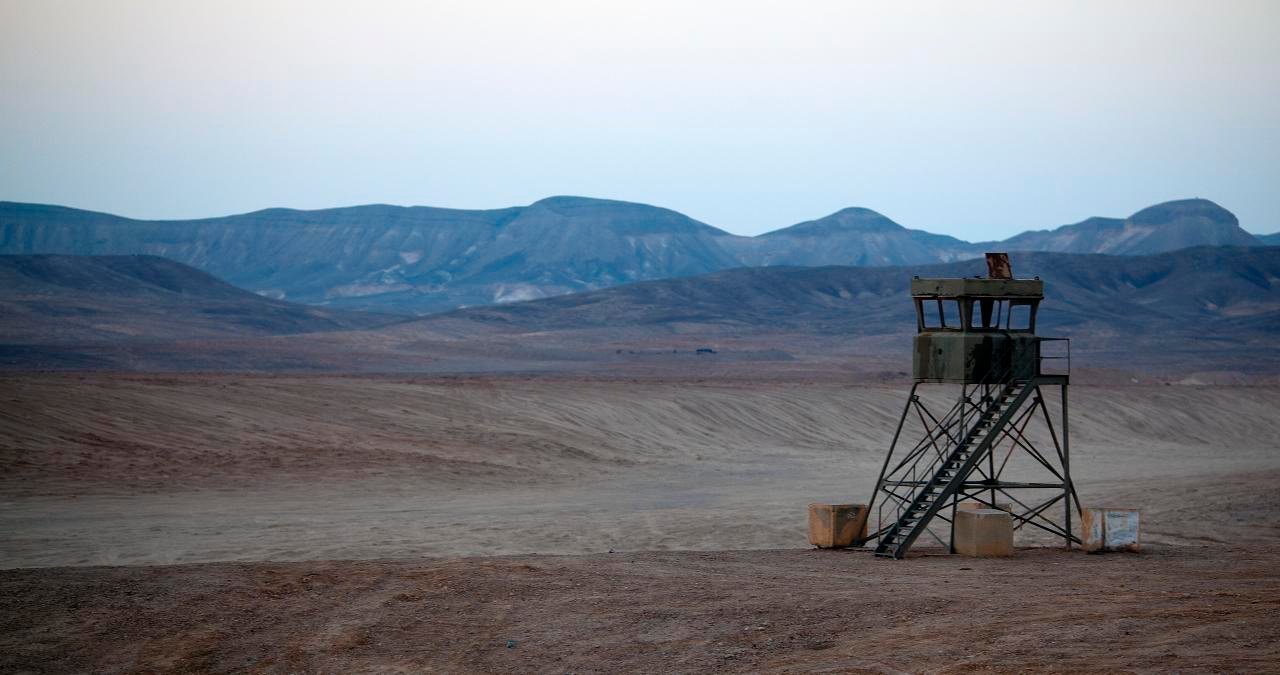
And inside this huge area there is not one landscape. There are wide valleys with loess soil, like the Beersheba valley. There are mountains. There are makhteshim, and that is a very special landform. There is a long Arava that descends to Eilat, and there are sands in the west.
And so 'to travel to the Negev' does not say anything exact. You can travel for hours inside the Negev and pass between landscapes that have no connection between them.
And that is also what makes the Negev a place where you learn geography with your eyes. In the north of the country you have to explain what a drainage basin is; here you see it. The layers in the rock are exposed, because there is no vegetation that covers them, and every hill shows the order of its layers from the outside.
And the soil itself is different here. A large part of the Negev is covered in loess — a soil formed from dust that the wind brought from the Sahara desert and from the sands of Sinai and laid down here layer upon layer. The grains that stayed close to the source of the dust are coarser, and the further north you go the finer they become. Most of the loess soils in the Land of Israel are in the south.
And how much rain actually falls inside this area? In the northern Negev about 200 millimeters a year, in its center 75 to 100, and in Eilat and the Arava only 20 to 50.
And there is one thing that is common to the whole Negev: little rain. The landscape changes, the vegetation changes, the rock changes — and everywhere, what determines what will grow and who will live there is how much water arrives and when. That is the reason that in the Negev every well, every spring and every dam is a story in itself, and that the large city in it is named after a well.
Sources
- נגב — ויקיפדיה העברית
- לס — ויקיפדיה העברית
- אקלים ארץ ישראל — ויקיפדיה העברית
- Photograph: Christopher Michel · CC BY 2.0