
Places
The Battle for Seventeen Wells
To remember
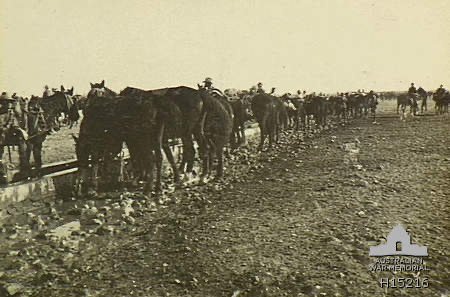
Beersheba had 17 wells, and it was they that made the city the target of the battle in 1917.
On 31 October 1917 Ottoman Beersheba fell to the British army, under the command of General Edmund Allenby.
And the first question is why here of all places. The city was small: it was founded in 1900, and on the eve of the war it numbered only about a thousand residents.
The answer is water. The city had 17 wells, and without them the army could not continue northward. A whole army needs water every day — for men, for horses, for camels. Without wells there is no advance in the desert.
The attack opened at 12:15. Two divisions attacked the western line of defense, while the Desert Mounted Corps, under the command of General Harry Chauvel, moved from the east.
And in the afternoon Chauvel ordered a charge with the 4th Light Horse Brigade — straight at the city. At 15:45 the horsemen received the order to mount.
And here is a detail that has stayed in memory: they had neither swords nor lances in their hands. They held the bayonets of their rifles in their hands.
According to the Australian War Memorial the trenches were broken through in less than an hour. In that charge two officers and 29 Australian soldiers were killed, and eight officers and 28 soldiers were wounded.
And how large a force stood against the attackers? According to the English Wikipedia the defenders of the city put up 4,400 rifles, 60 machine guns and 28 field guns. In that same source there are counted for the battle as a whole 171 killed on the British side, and about 1,000 killed and wounded on the Ottoman side, and 1,947 prisoners. The city fell in one day.
And this charge is considered one of the last great mounted actions in history. After it war changed, and horsemen on horses no longer decided battles.
Of the wells two were destroyed, and two more were damaged. The other fifteen remained — and that was the whole purpose.
The fall of the city opened the outflanking of the Gaza–Beersheba line, and on 6 November the Ottoman army withdrew from Gaza.
And the city itself, which had been founded only 17 years earlier, passed in one day from one set of hands to another.
The fallen of the battle are buried in the British military cemetery in Beersheba.
Sources
- Photograph: A.T. Adams — Australian War Memorial H15216 · נחלת הכלל