
Animals
One Hundred and Forty-Seven Vultures
To remember
In April 2019 only about 147 griffon vultures were counted in Israel.
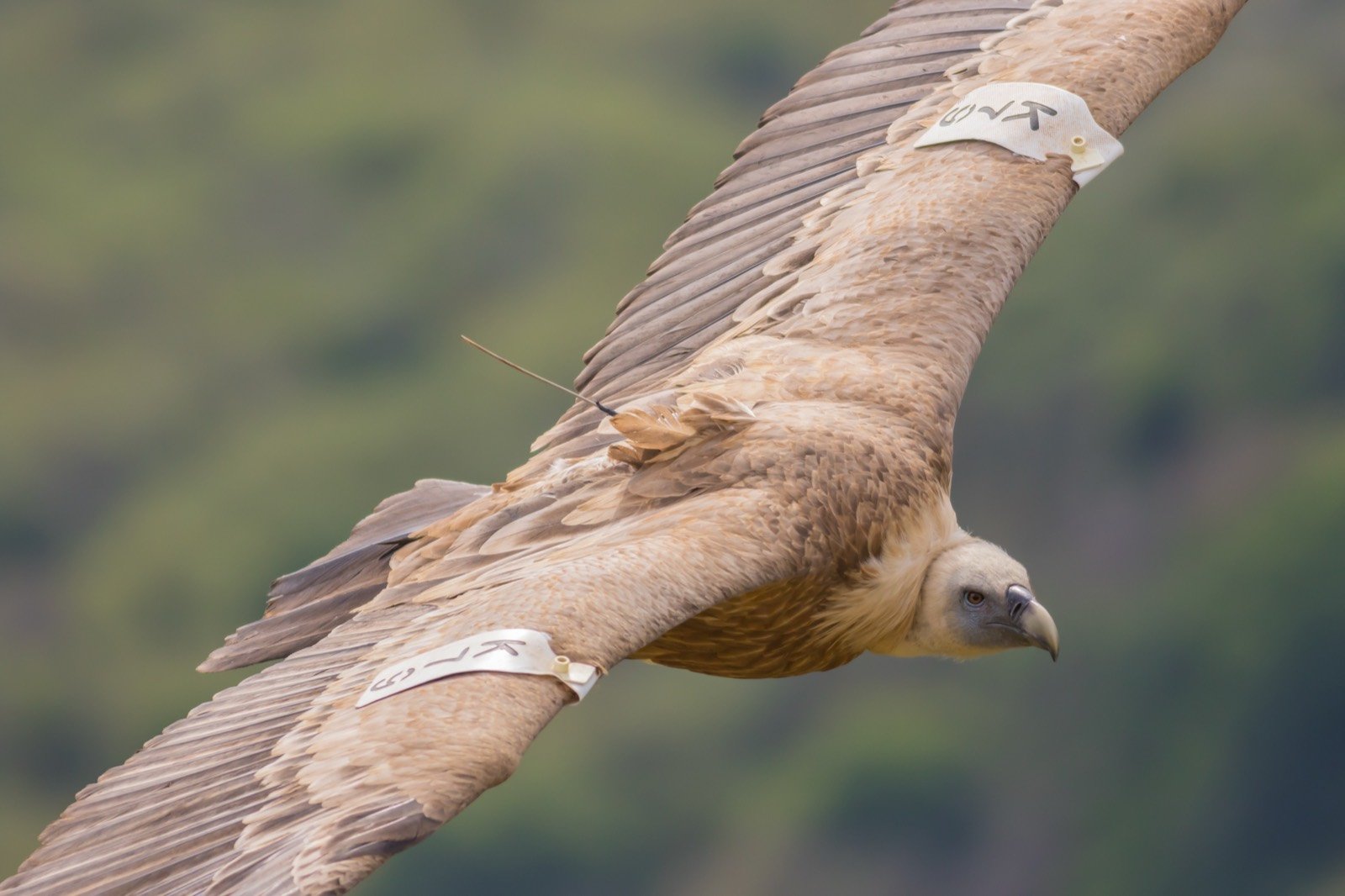
The wingspan of the griffon vulture reaches up to about 2 meters and 80 centimeters. Spread your arms out to the sides, and almost double it.
And first of all a small correction worth knowing. The nesher of the Hebrew language is not the bird that appears on emblems and flags — it is a bird of prey that eats carcasses. You can recognize it easily: the vulture has a bare neck, without feathers.
And why a bare neck? Because it puts its head inside, into a carcass. Feathers in that place would stay dirty; bare skin dries in the sun.
And the amazing thing about it is the eyes. Its sight is very sharp and has excellent resolving power, and it is able to make out food from a height of hundreds of meters and from a distance of many kilometers. That is, one vulture soaring high scans an enormous area almost without moving from its place.
And it also almost does not flap its wings, and that is the beautiful part. Hot air rises from the ground in columns, and the vulture enters such a column and circles upward in it without effort. When it has got high enough it glides onward, slowly, until it finds another column and rises again. In this way you can cross great distances on almost no energy.
And that is also the reason vultures do not take off at sunrise. They wait for late morning, after the ground has warmed enough to create those columns.
It usually builds its nest on cliffs, and in the Negev there are such cliffs.
And now the hard part. The vulture population in Israel is falling consistently, by about 7 percent a year. In April 2019 only about 147 individuals were counted in Israel.
And how long does it take to repair such a thing? Very long. A large bird lays few eggs and raises its chicks slowly; a population that falls by 7 percent a year falls far faster than it is able to grow back. That is the difference between destroying and building, and in nature too the one is not the reverse of the other.
One hundred and forty-seven. You can count them in one hour, and that is all that is left here of a bird that was common. And when a bird that eats carcasses disappears, what has died stays out in the field — exactly as with the hyena. The two animals nobody likes to think about are the ones that clean the desert.
Sources
- נשר מקראי — ויקיפדיה העברית
- Photograph: מינוזיג - MinoZig · CC0