
The Turkish Railway Station
The Turkish railway station stands north of the Old City of Beersheba and it is a heritage site
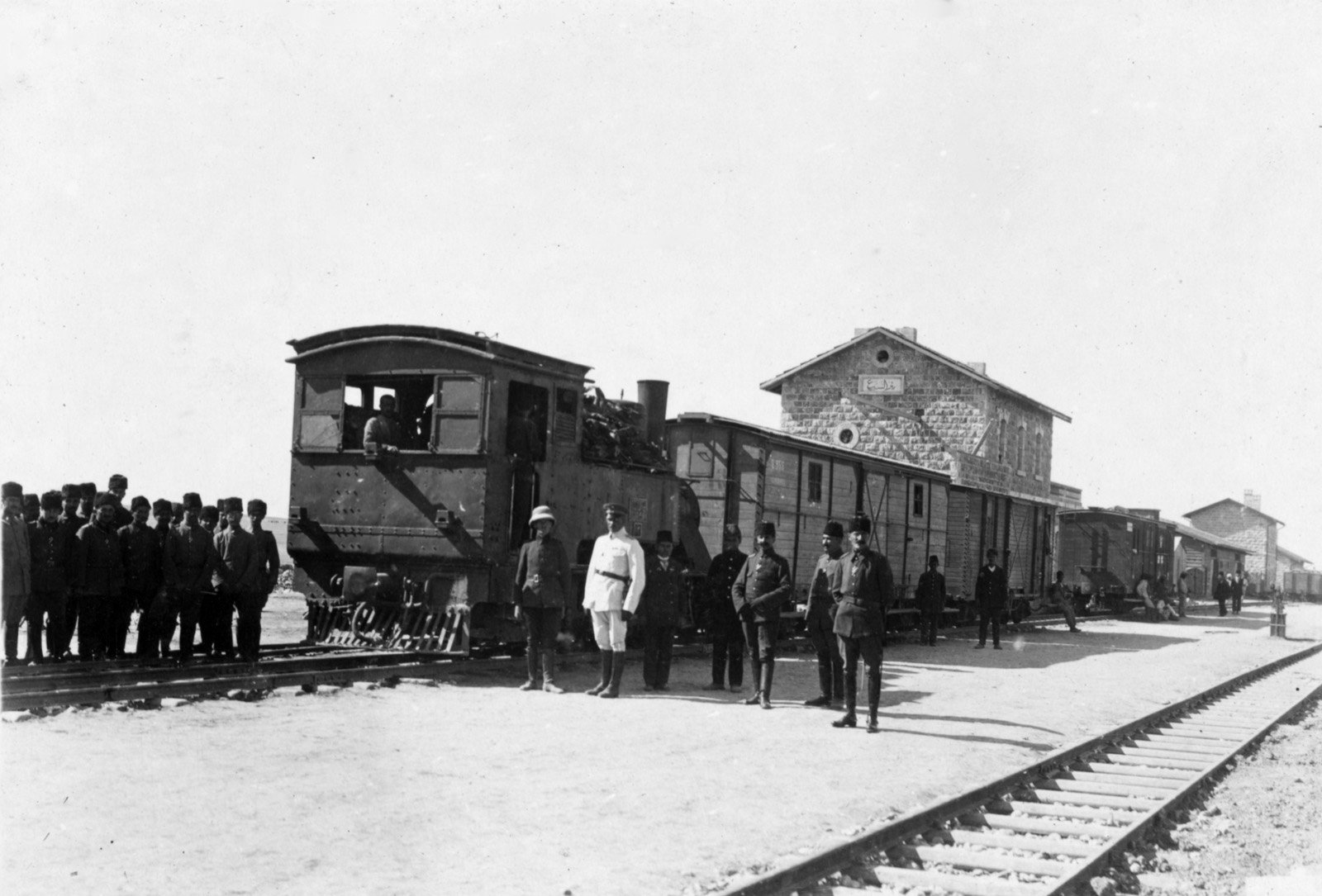
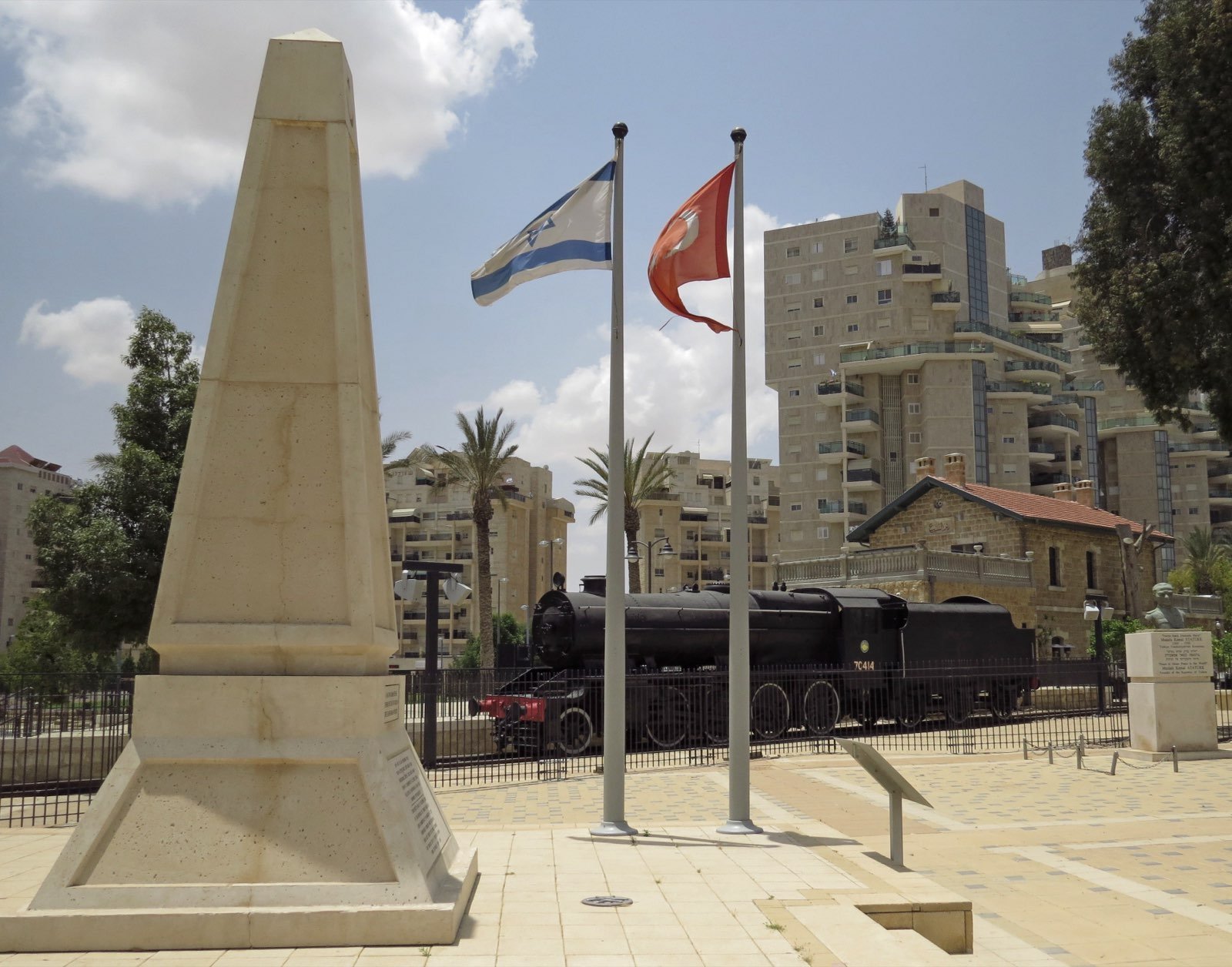
Then and now
The story
The Turkish railway station stands north of the Old City of Beersheba and it is a heritage site. The Ottomans built it in 1915 as a main station in their railway network in the Land of Israel, on the branch that led from Nahal Sorek to Kusseima — part of the logistical effort of the campaign for the Suez Canal and for Sinai in the First World War. The director of the works was the German railway engineer Heinrich August Meissner, who contributed much to the establishment of the Ottoman railway network, including the Hejaz railway. In the compound were built a terminal building, a building for the station manager, a workshop for locomotives and a water tower for cooling their boilers. In October 1915 the line was inaugurated in a ceremony to which a special train came from Damascus, carrying the Turkish supreme commander Djemal Pasha, Ottoman and German officers and European consuls. At the beginning of 1917 the station was bombed by forces of the British air arm, and sixteen Jewish workers were killed and were buried in a common grave. At the end of October 1917 the British army entered the city. The British preferred their own track, whose width is 143.5 centimeters, over the narrow Turkish track whose width is 105 centimeters; in 1919 most of the lines from the station were closed, and in 1927 the train traffic in it ceased entirely and its buildings passed into the hands of the Mandate officialdom. After 1948 the compound served as a listening base, and afterwards as an artisan workshop for paper and a field school station. From 2013 the Beersheba municipality and Israel Railways rehabilitated the compound and turned it into a center of culture and leisure, with an archive for the heritage of the city, historic carriages more than a hundred years old, and the steam locomotive 70414 after which the compound is named.
Read onPerhaps this too
At the place itself the stamp also gets a postmark with the date.
Sources
- תחנת הרכבת הטורקית בבאר שבע — ויקיפדיה העברית Accessed 2026-08-10
- Beersheba Turkish railway station (Q12412038) — Wikidata Accessed 2026-08-10
- File:מתחם תחנת הרכבת הטורקית בבאר שבע.jpg — Wikimedia Commons Accessed 2026-08-10
- OpenStreetMap — way/372316411 (תחנת הרכבת הטורקית בבאר שבע, wikidata=Q12412038) Accessed 2026-08-11

Photographs
- Shlomo.abitbul CC BY-SA 4.0
- American Colony Photo Department / Matson Photo Service — Library of Congress Public domain
